
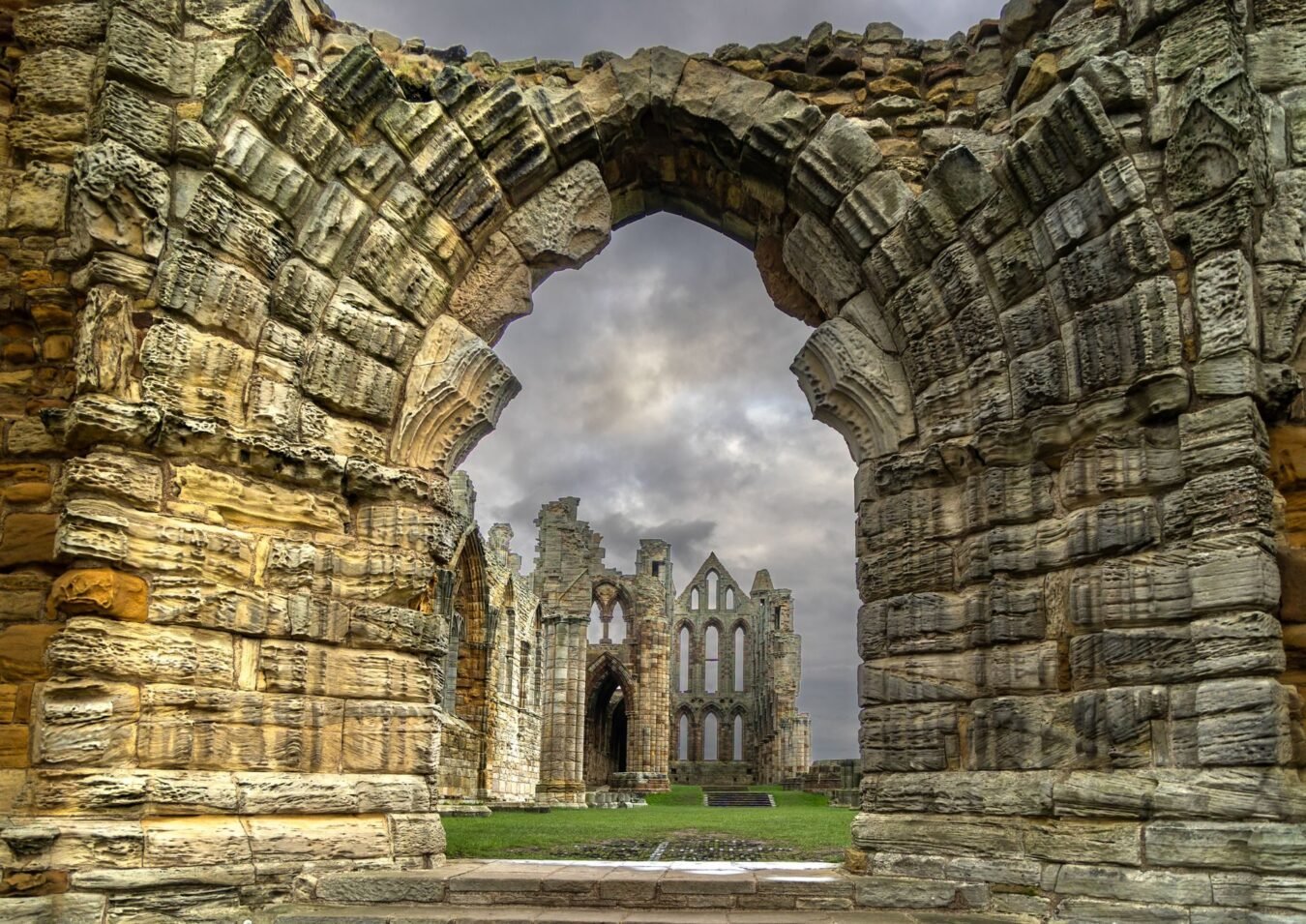
Yorkshire has inspired some of the best-loved books in English. You can walk the moors that shaped the Brontë sisters, climb the steps to Whitby Abbey like Bram Stoker’s Dracula, and visit the Thirsk home of James Herriot. Here’s a literary tour of the county.
The Brontës and Haworth
Start in Haworth, the cobbled West Yorkshire village where Charlotte, Emily and Anne Brontë lived and wrote. The Brontë Parsonage Museum was the family home. Walk out onto the moors above the village to see the landscape behind Wuthering Heights.
Where to stay: Moor View in Ilkley or Archie’s Place in Leeds.
Whitby and Dracula
Bram Stoker set part of Dracula in Whitby, and the clifftop abbey ruins, reached by the 199 steps, still feel suitably Gothic. Visit on a misty day for the full atmosphere.
Where to stay: our cottages at Sands Farm near Pickering.
James Herriot’s Thirsk
The World of James Herriot in Thirsk is a museum in the vet’s former surgery, the building that inspired All Creatures Great and Small. Afterwards, wander the cobbled market square and drive up to Sutton Bank for the views.
Where to stay: the Morndyke Shepherds’ Huts or Morndyke Cottage, a short drive from Thirsk. See our Thirsk accommodation.
Yorkshire’s poets
Yorkshire’s landscapes run through the work of poets including Ted Hughes and Simon Armitage, and Philip Larkin is closely linked with Hull.
Tips for a literary break
- Check museum opening times before you travel, especially in winter.
- Take a copy of the book with you and read it where it was set.
- Combine literary sites with walks. The moors around Haworth and the coast at Whitby are both best on foot.
